We redefine infrastructure and solar mounting systems with high-strength ZAM-coated steel — stronger, lighter, and more sustainable than conventional materials.
Our ZAM-coated high-strength steel achieves a yield strength of ≥ 700 MPa and tensile strength of ≥ 750 MPa — that is 3× the strength of standard Q235B steel used in conventional guardrail and solar mounting systems.
High strength enables wall thickness to be reduced to 1.5–2.0 mm without compromising structural integrity or load-bearing capacity. This directly reduces material consumption per linear meter and per mounting unit.
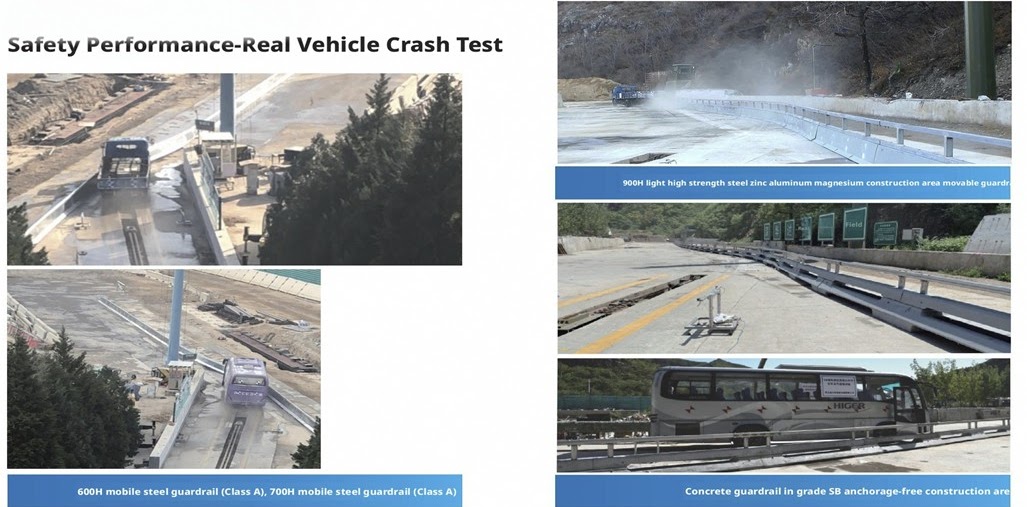
Higher structural strength means guardrails and solar support frames deliver superior resistance to impact, wind loading, and seismic forces — improving overall safety across highway and solar infrastructure.
| Parameter | Standard Q235B | ZAM High-Strength Steel |
|---|---|---|
| Yield Strength | 235 MPa | ≥ 700 MPa (3×) |
| Tensile Strength | 375 MPa | ≥ 750 MPa (2×) |
| Typical Wall Thickness | 3.0–4.0 mm | 1.5–2.0 mm |
| Material Usage per Unit | Baseline | –30% to –46% |
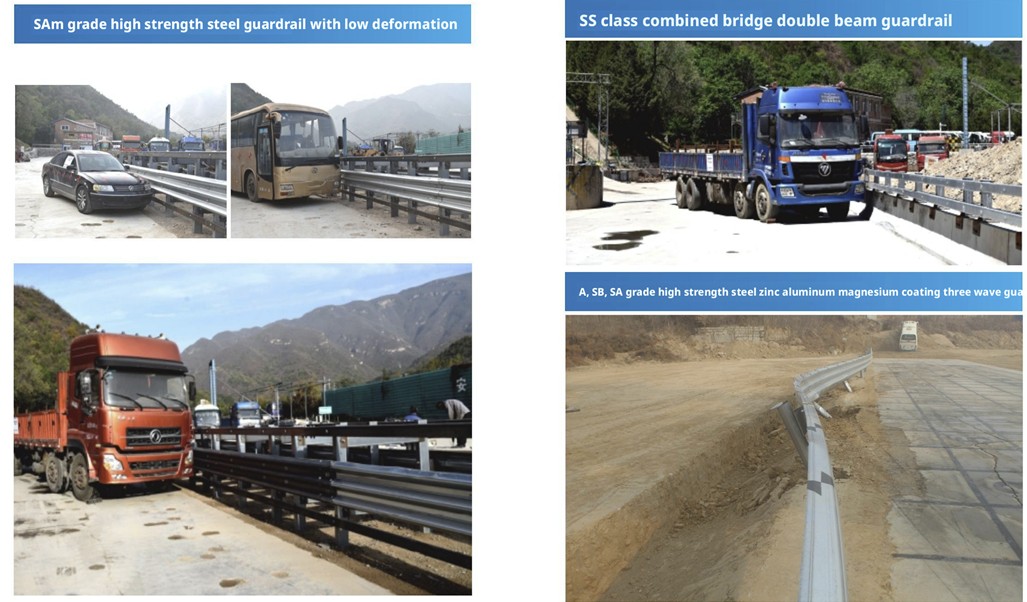
TB/H2 Crash Test
Vehicle Deflection Result
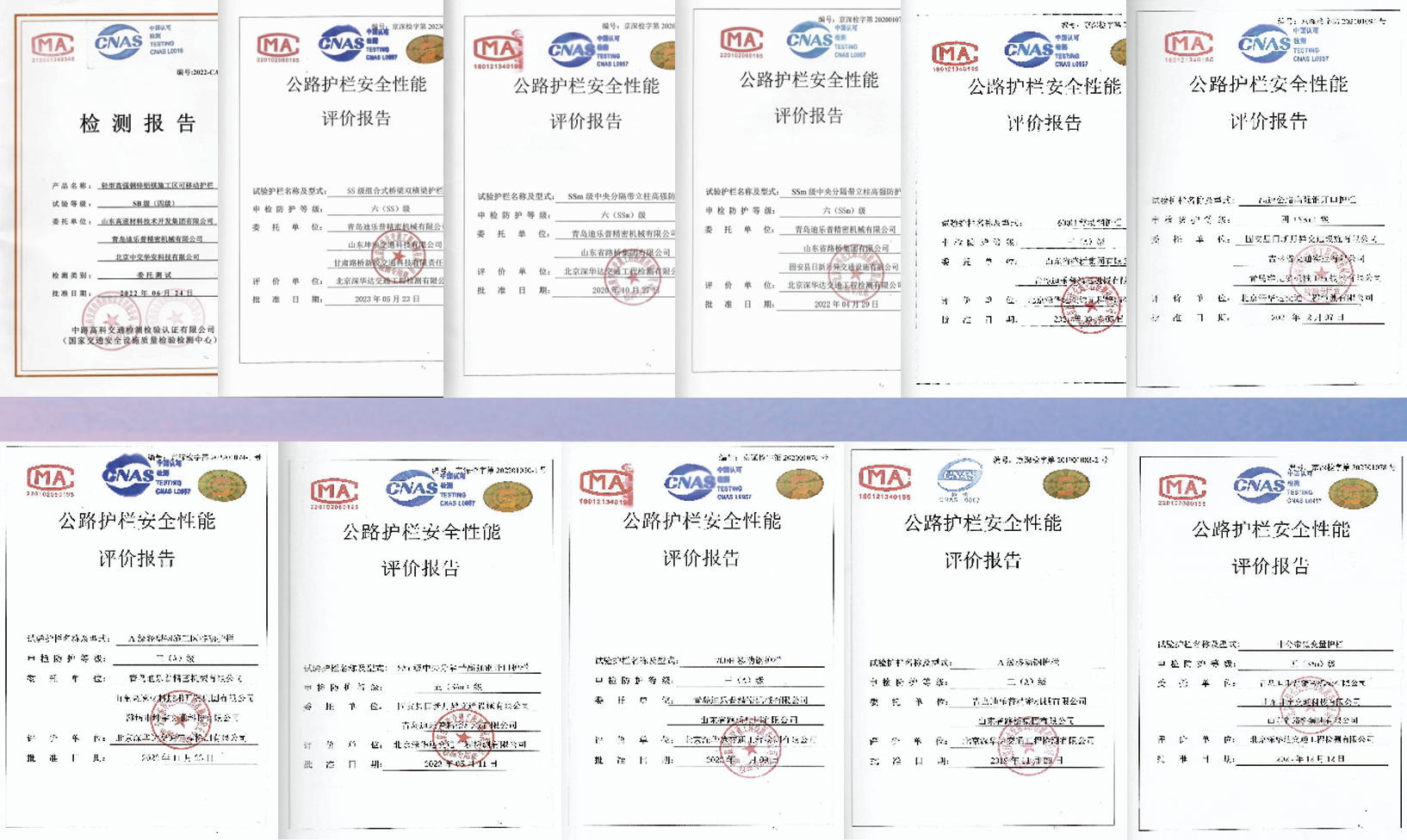
Test Certificate
📸 Upload crash test photos to images/ folder.
Reducing steel consumption and component weight delivers compounding savings across procurement, logistics, and installation — lowering the Total Cost of Ownership (TCO) for highway and solar projects.
Compared to conventional steel or aluminum systems, our optimized high-strength designs achieve 15–25% lower material cost per project — without any compromise in structural performance or durability.
Components are 30–46% lighter than equivalent Q235 steel parts. This reduces on-site labor intensity, simplifies handling, and speeds up installation — particularly valuable for large-scale EPC deployments in remote or offshore locations.
Lower component weight allows more units per container, translating to approximately 45% reduction in shipping cost per MW of solar capacity or per kilometer of guardrail installed.
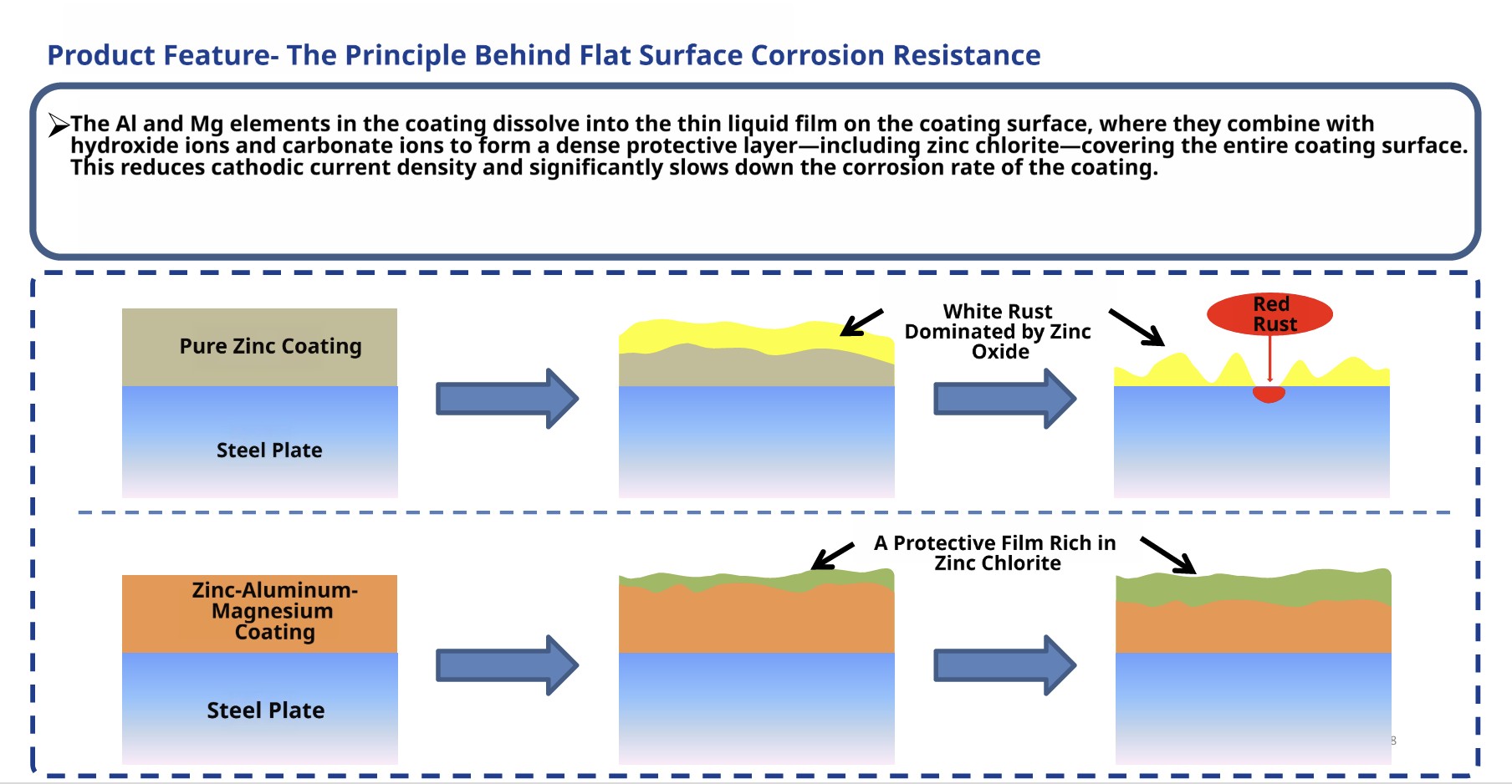
The Zinc-Aluminum-Magnesium (ZAM) ternary alloy coating delivers world-class durability in the most demanding environments — including coastal, high-salinity, high-humidity, and industrial zones.
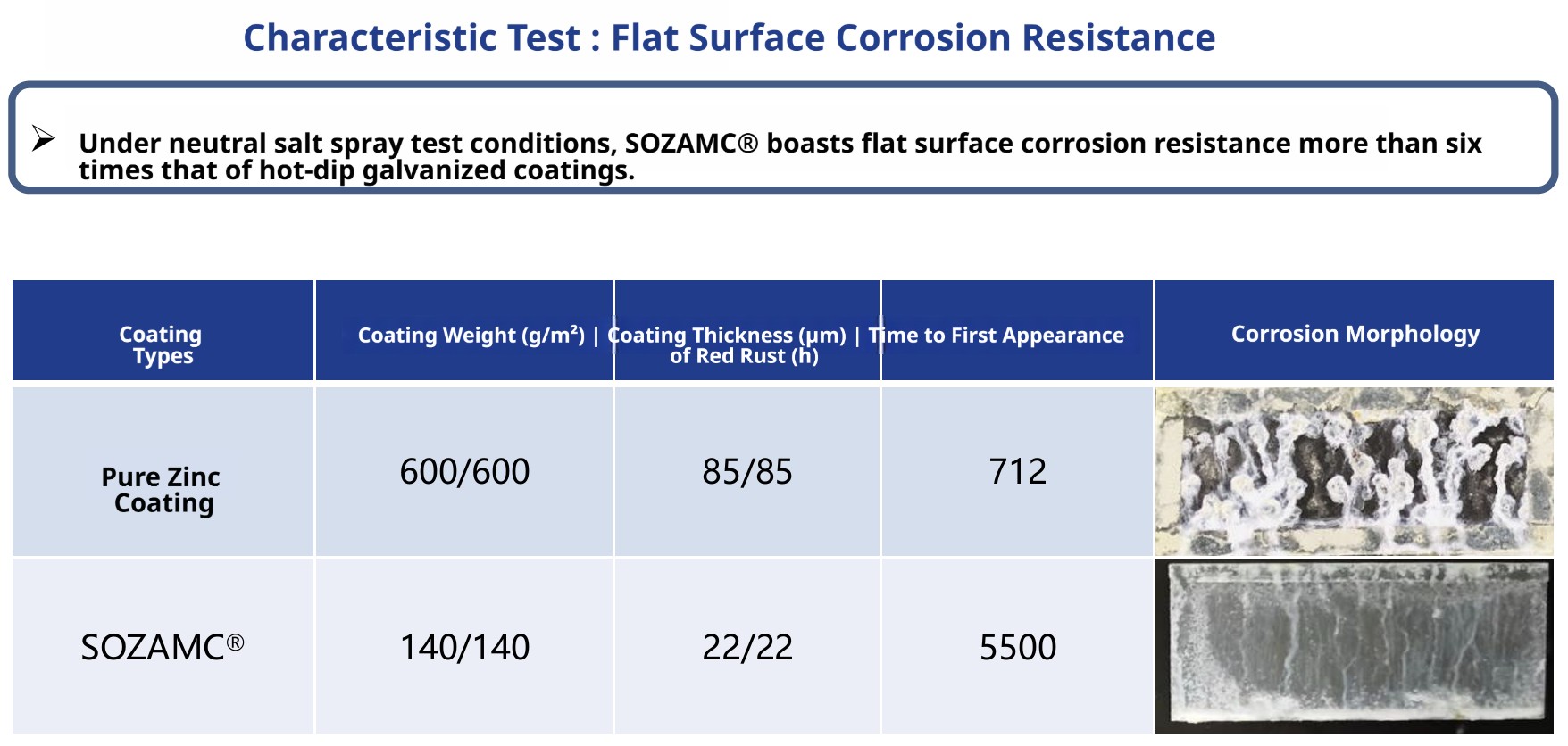
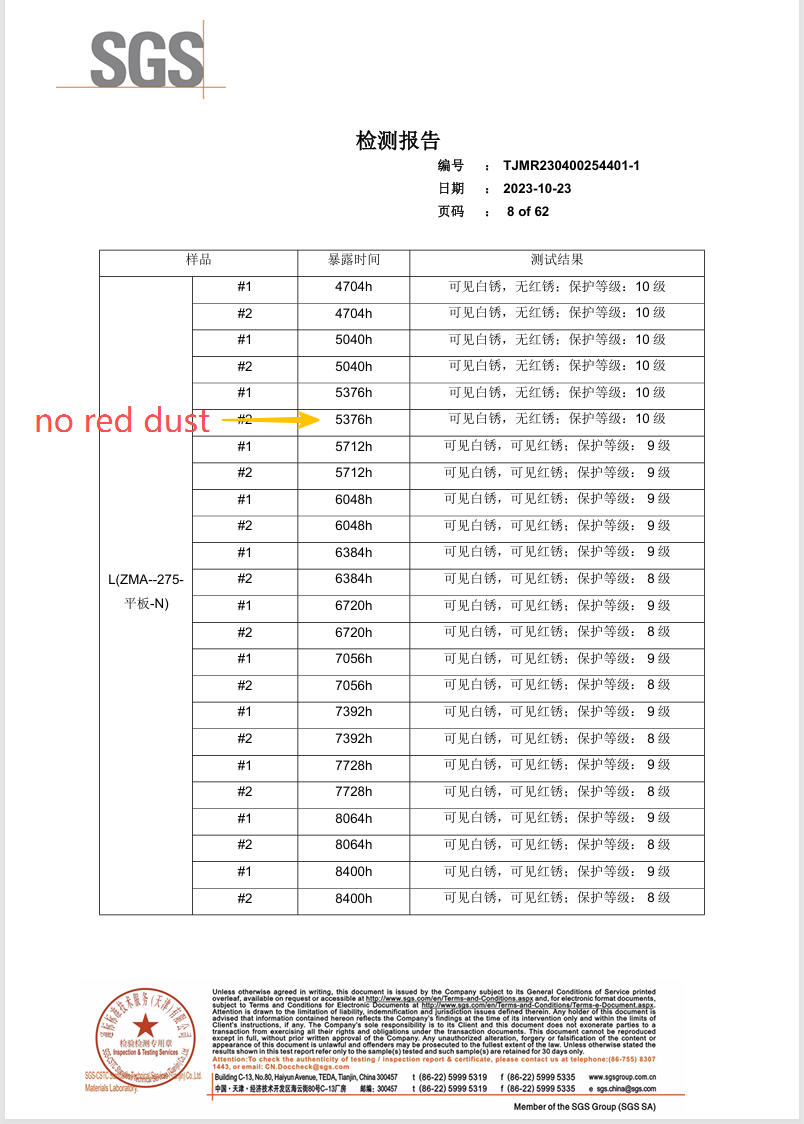
Our products have been tested to over 5,040 hours without red rust in standardized salt spray testing — compared to approximately 800 hours for conventional hot-dip galvanized (HDG) steel. That is more than 6× the corrosion resistance.
ZAM — 5,040hrs ✓
HDG — ~800hrs
Test Certificate
📸 Upload your salt spray test photos to images/ folder to replace placeholders.
Unlike conventional coatings, the ZAM system is self-healing: when the steel is cut or scratched during installation, magnesium and zinc alloy ions migrate to the exposed surface, forming a stable, dense protective film. This eliminates the "cut-edge corrosion" problem that plagues traditional HDG and paint-coated systems.
ZAM systems offer twice the service life of conventional galvanized steel — particularly relevant for offshore solar, coastal highway guardrails, and infrastructure in tropical climates.
| Test / Parameter | Hot-Dip Galvanized | Painted Steel | ZAM Coated |
|---|---|---|---|
| Salt Spray Test Duration | ~800 hrs | ~500 hrs | 5,040+ hrs |
| Cut-Edge Corrosion | High risk | High risk | Self-healing ✓ |
| Expected Service Life | 15–20 yrs | 10–15 yrs | 30+ years |
| Coastal / Offshore Suitability | Moderate | Low | Excellent ✓ |
| Post-Processing Required | Yes (HDG process) | Yes (painting) | No — pre-coated ✓ |
When steel with ZAM coating is cut or scratched, the zinc-aluminum-magnesium alloy ions dissolve and diffuse toward the damaged area. They react with environmental moisture and oxygen to form a dense, chemically stable zinc-hydroxide and zinc-carbonate protective layer — effectively sealing the cut edge and preventing further oxidation.
ZAM Anti-Corrosion Mechanism
Self-Healing Cut Edge
📸 Upload ZAM mechanism diagrams to images/ folder.
Our manufacturing process is designed to help customers achieve green energy and ESG goals — not just in the operation of solar systems, but in the embedded carbon of the infrastructure itself.
Conventional steel guardrail and solar mounting components require post-process hot-dip galvanizing (HDG) — a high-temperature, energy-intensive, and chemically polluting process. Our ZAM steel is pre-coated prior to cold-forming, completely eliminating this step.
By reducing steel content by up to 46% and eliminating HDG post-processing, our systems significantly reduce the embodied carbon of each project. Combined with fewer transport trips due to lower weight, the overall carbon footprint of procurement and installation is dramatically reduced.
Our products can be engineered to comply with international guardrail and solar mounting standards for global EPC project supply:
Our engineers will calculate projected material savings, logistics efficiency, and TCO reduction for your specific project scope — at no cost.